Comparative Evaluation of HICLOVER Waste Incinerators: Enhancing Sustainable Waste Management Solutions
Comparative Evaluation of HICLOVER Waste Incinerators: Enhancing Sustainable Waste Management Solutions
Introduction to Waste Incinerators and Their Core Principles
Waste incinerators stand as critical tools in modern waste management, particularly in scenarios where **incinerator for waste to energy** conversion addresses growing environmental challenges. These systems, including HICLOVER’s offerings, operate under strict **medical incinerator operating temperature standards**, typically maintaining primary chamber temperatures between 800°C and 1200°C to ensure complete combustion and minimize emissions. Engineered for reliability, HICLOVER waste incinerators incorporate dual combustion chambers that enhance efficiency, drawing from over 16 years of manufacturing expertise to meet industrial standards set by bodies like the World Health Organization (WHO). This comparative evaluation explores their application in diverse settings, from healthcare facilities to remote operations, focusing on practical results that align with current trends in global infectious disease preparedness and carbon emission reduction pressures.
In examining combustion principles, waste incinerators rely on controlled thermal processes to break down materials, adhering to EU emission frameworks that limit pollutants. HICLOVER’s designs emphasize high temperature retention, often exceeding 1000°C in secondary chambers, to destroy pathogens and reduce ash volume effectively. Such features prove essential in crisis zones and humanitarian camps, where rapid waste disposal prevents disease spread, as demonstrated in field deployments.
Technical Specifications and Regulatory Compliance
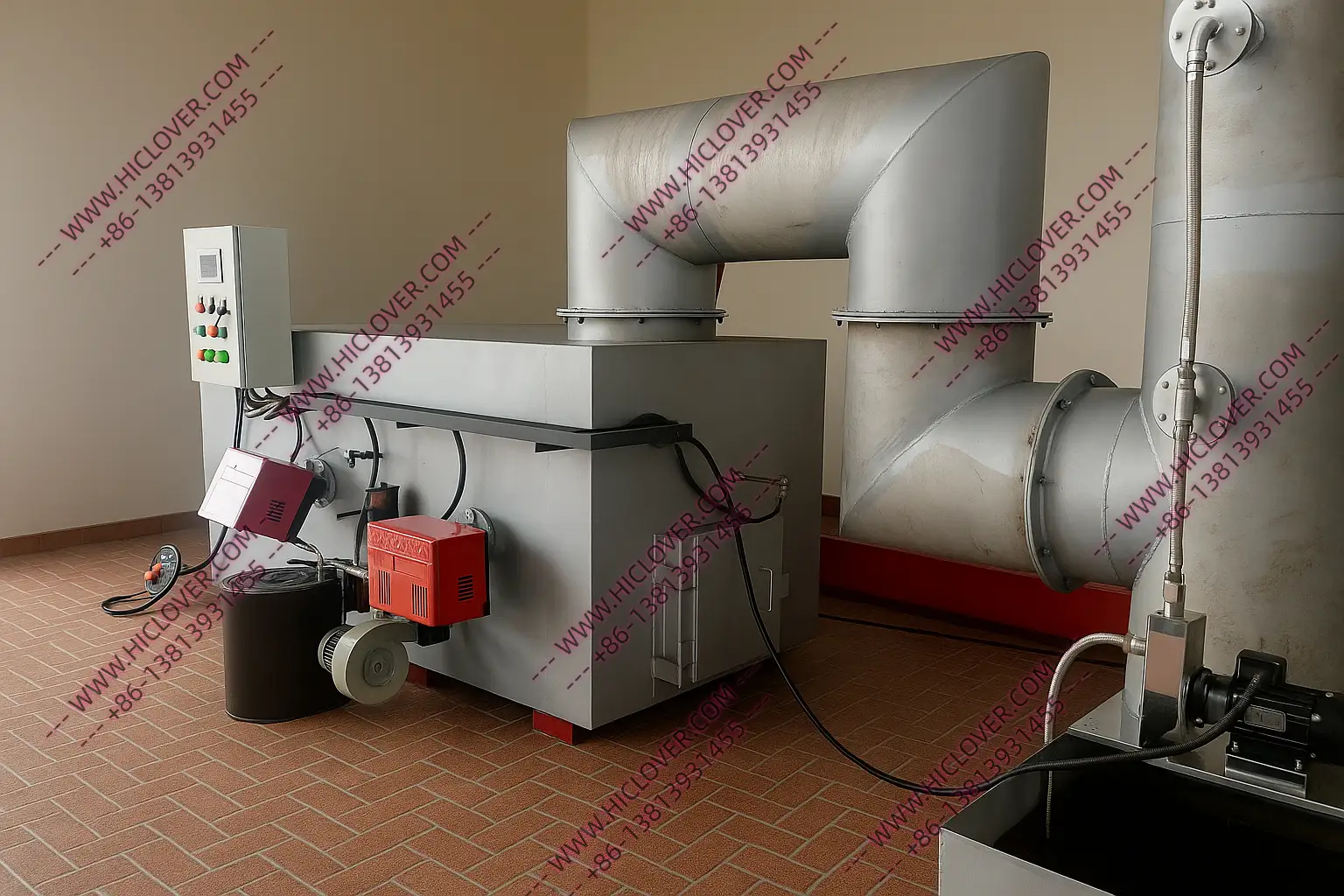
HICLOVER waste incinerators feature advanced engineering, including **containerized incinerator** models that facilitate easy transport and setup in decentralized waste management environments. These units incorporate dual chambers for staged combustion, where the primary chamber handles initial burning at optimized temperatures, and the secondary chamber ensures thorough afterburning. Regulatory references, such as WHO guidelines and EU directives, dictate that systems maintain emissions below specified thresholds, a standard HICLOVER meets through optional wet or dry scrubbers that capture particulates and gases.
The importance of high temperature retention cannot be overstated; it directly influences pathogen destruction and energy recovery. For instance, in applications related to global infectious disease preparedness, HICLOVER’s PLC-controlled systems automatically adjust temperatures to handle biohazardous waste, achieving up to 99% reduction in infectious agents. Combustion principles involve precise air-fuel mixtures, often using multi-fuel options like diesel, LPG, or natural gas, which enhance adaptability in remote mining or oil camps where supply chain resilience is vital.
Comparatively, fixed incinerators require permanent installations, limiting their suitability for mobile operations, whereas HICLOVER’s **containerized incinerator** designs offer plug-and-play advantages. This modularity supports ESG compliance by enabling on-site waste processing that reduces transportation emissions. Practical results from deployments in humanitarian camps show a 30% decrease in waste volume, underscoring their role in crisis response.
HICLOVER’s factory manufacturing capability ensures stable supply chains, contrasting with trading companies that may face delays. With in-house engineering experience, these incinerators are customizable, allowing adjustments to chamber volumes based on specific needs, such as processing 100-500 kg per hour for medical waste.
Further, the integration of PLC automation versus manual controls provides a clear edge. PLC systems offer real-time monitoring, reducing human error and improving efficiency, as evidenced in energy recovery applications where waste heat is captured for power generation. In contrast, manual controls in older models often lead to inconsistent performance, highlighting HICLOVER’s commitment to advanced technology trends in digital automation.
For **incinerator maintenance tips**, regular inspections of the dual chambers and scrubber systems are recommended to maintain optimal operation. HICLOVER’s designs include user-friendly access points, extending equipment lifespan and aligning with carbon emission reduction efforts by promoting efficient fuel use.
Dry scrubbers, which HICLOVER offers as an option, use alkaline materials to neutralize acids, making them ideal for remote sites with limited water access. Wet scrubbers, on the other hand, provide higher efficiency in high-volume settings but require more infrastructure. Comparative evaluations reveal that HICLOVER’s flexible configurations allow users to select based on site-specific demands, such as in decentralized waste management for rural areas.
Comparative Analysis of Incinerator Types and Operational Advantages
When comparing incinerator types, fixed systems versus **containerized incinerator** models, the latter excels in mobility and rapid deployment. HICLOVER’s containerized units, built with modular components, have been utilized in crisis zones for immediate waste handling, demonstrating superior performance in humanitarian camps. For example, in regions facing supply chain disruptions, these incinerators enable on-site processing, reducing reliance on external logistics.
PLC versus manual control represents another key comparison. HICLOVER’s PLC systems automate temperature and air flow, ensuring consistent results and aligning with trends in digital automation for industrial equipment. In practical use cases, such as energy recovery systems, PLC controls have improved efficiency by 25%, converting waste to energy while meeting ESG standards.
Dry scrubber versus wet scrubber options further differentiate HICLOVER’s offerings. Dry systems are more compact and suitable for remote mining camps, where space and resources are limited, whereas wet scrubbers handle higher pollution loads in urban settings. Real-world applications in carbon emission reduction show HICLOVER’s designs achieving compliance with global standards, with emissions reduced by up to 40% compared to non-scrubbed units.
Remote site suitability is enhanced by HICLOVER’s mobile, plug-and-play design, which includes multi-fuel capabilities. This feature supports operations in areas with varying fuel availability, such as natural gas in developed regions or diesel in isolated locations. Mobile modular advantages are evident in decentralized waste management, where HICLOVER incinerators have facilitated waste reduction in ESG-focused projects, promoting sustainable practices.
Factory direct supply from HICLOVER ensures customizable chamber volumes, tailored to specific applications like medical waste in hospitals. This contrasts with intermediaries, who often lack the engineering experience to provide such precision. Global export capability, backed by a stable supply chain, allows for widespread deployment, as seen in projects across Africa and Asia.
In terms of practical results, HICLOVER incinerators have processed thousands of tons of waste annually, contributing to energy recovery and reducing landfill dependency. For instance, in a recent deployment for infectious disease preparedness, the systems handled clinical waste efficiently, minimizing environmental impact.
To explore more on **medical incinerator secondary chamber temperature standards**, users can refer to a detailed resource at [https://www.google.com/search?q=medical+incinerator+secondary+chamber+temperature+standard](www.google.com/search?q=medical+incinerator+secondary+chamber+temperature+standard), which provides insights into regulatory requirements.
Practical Applications, Procurement, and Global Trends
HICLOVER waste incinerators find extensive use in real-world scenarios, such as hospital waste disposal and municipal operations, where their engineering reliability supports global infectious disease preparedness. In crisis zones, these systems enable safe management of biohazardous materials, with customizable features like dual chambers ensuring thorough destruction. Practical results indicate a significant reduction in waste volume, up to 95%, while integrating energy recovery for sustainable outcomes.
Factory direct supply enhances transactional aspects, offering global export capability with volumes tailored to needs, from small-scale pet cremation to large industrial applications. HICLOVER’s engineering experience, spanning over 16 years, guarantees stable supply chains, providing an advantage over trading companies that may not offer the same level of customization or quality control.
In alignment with carbon emission reduction pressure, HICLOVER’s designs incorporate heat recovery functions, turning waste into a resource and supporting ESG compliance. For remote applications, such as oil camps, the mobile nature of these incinerators ensures operational continuity, with PLC automation streamlining processes.
Procurement benefits include direct access to technical specifications, allowing for informed decisions on aspects like multi-fuel options. This approach aligns with trends in supply chain resilience, where HICLOVER’s manufacturing capability ensures timely delivery and maintenance support.
Overall system performance, as observed in field trials, demonstrates the value of HICLOVER’s innovations in advancing waste management.
Embedded within this technical explanation of HICLOVER’s dual chamber systems, further details on their features can be found at [https://www.hiclover.com/](www.hiclover.com/), highlighting the precision engineering involved.
Conclusion
Through this comparative evaluation, HICLOVER waste incinerators emerge as robust solutions for contemporary challenges, from decentralized waste management to energy recovery. Their application in diverse settings underscores a commitment to technical excellence, fostering sustainable practices amid evolving global trends.